How to Plan a Garden Party on Any Budget
Garden parties are one of the most beautiful and budget-friendly events you can host — if you know where to spend and where to save. Here's how to plan one that feels intentional and lovely.
There's something about a garden party that feels instantly special — the fresh air, the natural backdrop, the unhurried pace of an afternoon outside. The good news? You don't need an estate or a florist on speed dial to pull one off beautifully. A garden party is one of the most budget-friendly events you can host, if you know where to spend and where to save.
Here's how to plan one that feels intentional and lovely, whether you're working with $200 or $2,000.
Start with a guest count (it drives everything)
Before you think about food, decorations, or anything else — nail down your numbers. A garden party for 10 people and one for 50 are entirely different events, even if the vibe is the same.
Your guest count determines how much food you need, how many chairs and tables to rent or borrow, and whether your space can actually hold everyone comfortably. As a loose guide, make sure guests have enough room to move, sit, and gather without every chair being wedged against a planter.
Once you have a number, build your budget around it:
Under 20 guests: $150–$400 total is very doable
20–50 guests: $400–$1,200 depending on food and rentals
50+ guests: $1,000 and up if you're providing most of the food, rentals, and setup yourself
Set your budget by category before you spend a single dollar
This is where most garden party planning goes sideways. People buy decorations first, then realize they've blown half their budget before buying a single plate of food.
Plan your categories first:
Food and drinks (usually 40–50% of the total budget)
Decorations and florals
Rentals (tables, chairs, linens, tableware)
Activities or entertainment
Invitations and paper goods
Buffer (always keep 10–15% unallocated — something always comes up)
💡 Use the Event Budget Planner to map this out before you commit to anything. It breaks your budget down by category, shows you exactly where your money is going, and flags when you're over in one area so you can adjust elsewhere.
Choose your food format wisely
Food is where budget garden parties either shine or fall flat. The format matters as much as the menu.
Grazing tables are your best friend on a budget. A well-styled spread of cheeses, charcuterie, fruits, crackers, dips, and bread feels abundant and intentional — and costs far less per head than a plated meal. Guests love them because they can graze at their own pace, and you love them because there's no timing pressure.
Afternoon timing saves money. A party from 2–5pm sits between lunch and dinner, so guests aren't expecting a full meal. Light bites, a signature drink, and something sweet is entirely appropriate — and significantly cheaper than feeding people a proper dinner.
Potluck-style for close friends can work beautifully if it's framed right. Assign categories rather than leaving it open-ended — someone brings a salad, someone brings a dessert. This works especially well for casual gatherings where the group knows each other well.
Drinks: A signature drink — one cocktail and one non-alcoholic version — is more elegant than a full bar and dramatically cheaper. Make a big batch ahead of time and let guests serve themselves.
Decorate with what grows
The best garden party decoration is already there: the garden itself. Work with what you have rather than against it.
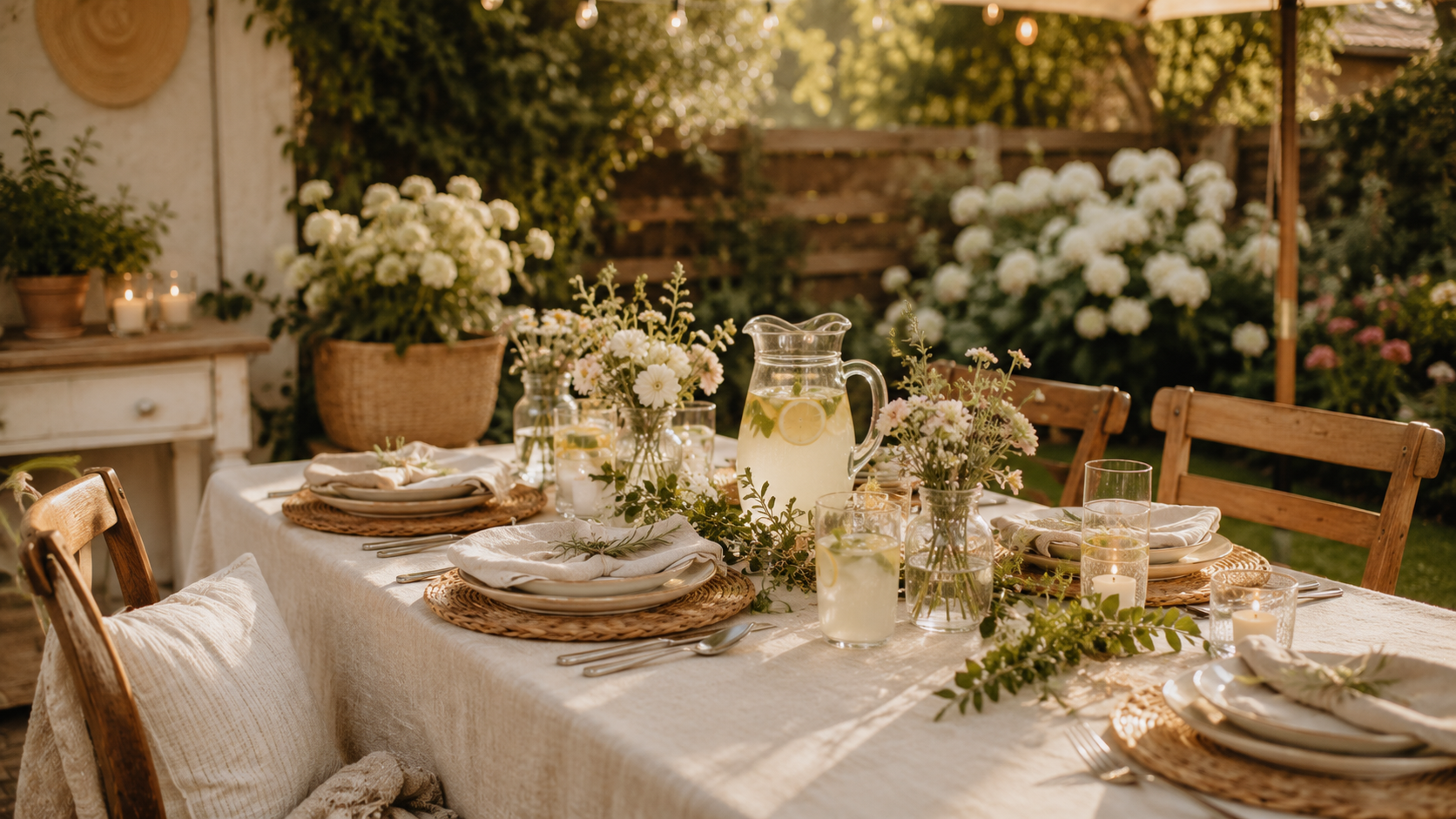
Fresh flowers from the grocery store arranged in mismatched vessels — jam jars, pitchers, vintage bottles — look charming and cost a fraction of formal arrangements. Seasonal blooms are always cheapest: sunflowers in summer, dahlias in early autumn.
Lighting changes everything. String lights or paper lanterns transform an ordinary backyard into something magical as the afternoon turns to evening. They're reusable, inexpensive, and do more heavy lifting than almost any other decorating choice.
Tablecloths and linens in a consistent color palette (not necessarily matching) tie everything together. Linen-look fabric from a craft store, cut to size, costs less than renting and feels more personal.
Avoid over-decorating. The outdoors already provides texture, color, and movement. A few intentional touches beat a cluttered table every time.
Have a simple weather plan
You don't need a full tented production, but you do need a plan. Decide ahead of time what happens if it rains, gets too hot, or turns windy. That might mean moving food indoors, borrowing pop-up canopies, setting up a shaded drink station, or simply choosing a rain date for a casual gathering. A weather plan keeps the party from becoming a group panic exercise with potato salad.
Rentals vs. borrow vs. buy
For a one-time party, buying isn't usually the right call. Here's how to think about it:
Borrow first — chairs, folding tables, serving platters, and large pots can often come from friends and family. Most people are happy to lend for a party.
Rent for larger gatherings — if you need more than 20 chairs or proper round tables, rental companies are usually affordable and handle delivery. Get quotes early; weekend summer rentals book up fast.
Buy only what you'll reuse — string lights, a good tablecloth or two, and a set of nice serving boards are worth owning. Disposable decorations rarely are.
The details that make it feel special
A garden party lives or dies by atmosphere. These small touches cost almost nothing but make a big difference:
A handwritten or printed menu card on each table makes guests feel considered
A simple lawn game (bocce, croquet, cornhole) keeps energy up without needing entertainment
A designated photo spot — a pretty corner with flowers and good light — gives guests somewhere to gather
Music at the right volume: audible but not competing with conversation
Put it all together before you spend
The single biggest mistake garden party hosts make is buying things piecemeal and losing track of the total. By the time the party arrives, they've spent twice what they planned.
Once you have your rough plan, use the Event Budget Planner to turn the ideas into actual numbers — by category, per guest, with room for the unexpected. It takes five minutes and is the clearest way to see your whole party at a glance before any money leaves your wallet.
A beautiful garden party isn't about spending more. It's about spending deliberately — on the things that actually create the atmosphere you're after, and letting the rest go.